Printable Pet First-Aid Cheat Sheet for Emergencies
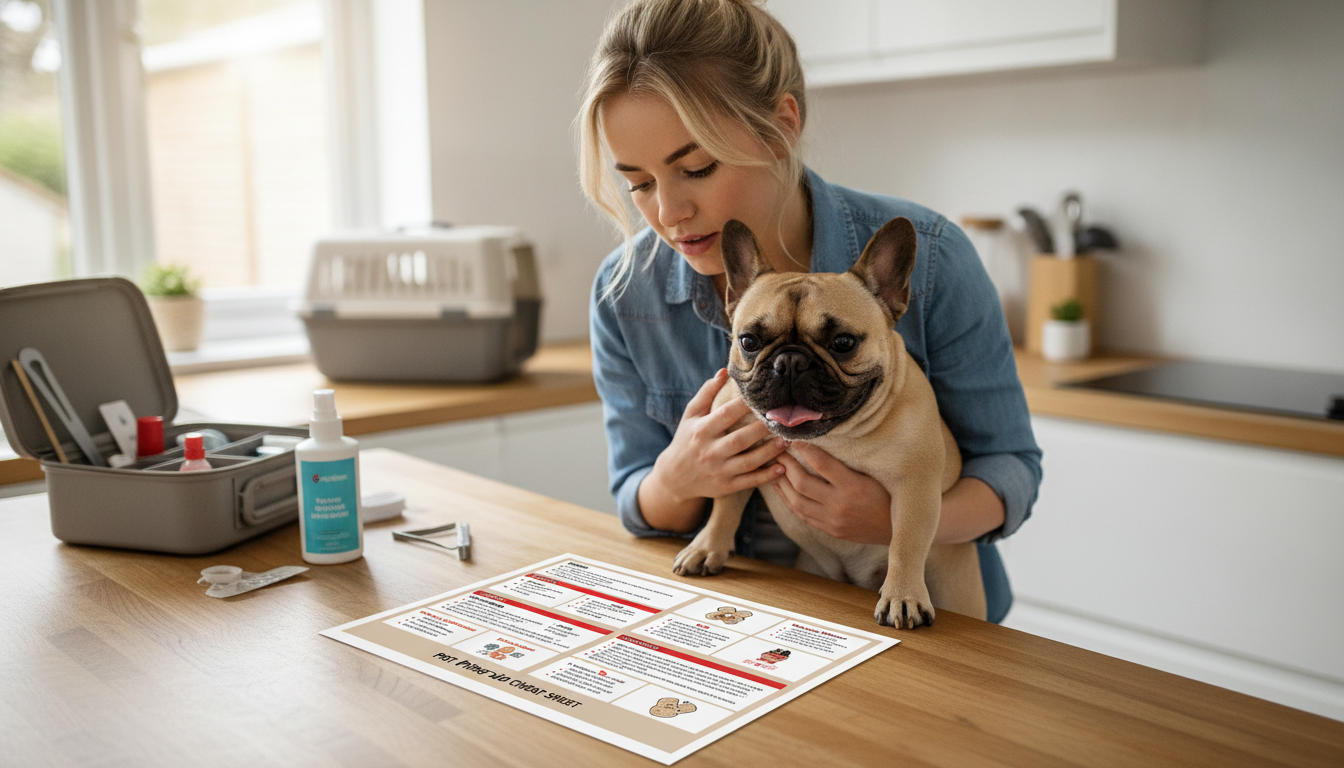
Must-Know Pet First-Aid Cheat Sheet: Emergency Printable Guide for Pet Owners
Emergencies are loud, fast, and stressful—especially when a pet is hurt or suddenly unwell. A simple, printable first-aid cheat sheet helps pet owners act quickly, stay organized, and communicate clearly with a veterinary team. The goal isn’t to replace veterinary care; it’s to buy time, prevent common mistakes, and get your pet to professional help as safely as possible.
Why a Pet First-Aid Cheat Sheet Belongs in Every Home and Car
When adrenaline hits, even experienced pet owners can freeze. A one-page guide keeps you focused on the next right step.
- Reduces panic by turning “What do I do?” into a short checklist of actions.
- Helps you recognize life-threatening warning signs early: breathing trouble, collapse, uncontrolled bleeding, or suspected poisoning.
- Improves communication during emergency calls by prompting you to share clear details (timing, symptoms, weight, medications).
- Supports safer transport to the clinic with reminders for wrapping, limiting movement, and using a muzzle if needed.
- Pairs well with a small, clearly labeled pet first-aid kit that’s easy to grab.
If you want a ready-to-print version you can keep on the fridge and in the glove box, the Must-Know Pet First-Aid Cheat Sheet (Printable) is designed for quick scanning during stressful moments.
Before an Emergency: Set Up the Basics in 15 Minutes
A little prep now can save critical minutes later.
- Save essential numbers: your primary vet, the nearest 24/7 ER vet, and an animal poison control hotline.
- Record pet details: current weight, medications, allergies, microchip ID, and chronic conditions.
- Practice safe restraint: a scared pet may bite; keep a soft muzzle (or roll gauze) and a thick towel/blanket nearby.
- Plan transport: keep a carrier accessible for cats and small dogs; for larger dogs, keep a blanket that can work as a stretcher.
- Post the cheat sheet on the fridge and keep another copy in the car and pet travel bag.
Emergency Info to Fill In Now (Print and Keep Visible)
| Item | What to write | Where to keep it |
|---|---|---|
| Primary veterinarian | Clinic name, phone, address | Fridge + phone contacts |
| 24/7 emergency hospital | Phone, address, driving directions note | Car + phone favorites |
| Poison help | Hotline name + phone, pet’s weight | Fridge + wallet card |
| Pet profile | Name, species/breed, age, weight, microchip | Cheat sheet + phone note |
| Medical notes | Meds/doses, allergies, conditions | Cheat sheet + vet records folder |
Triage: Decide What’s Urgent in Under a Minute
When something feels “off,” triage helps you decide whether to go now, call first, or monitor closely. Go to an emergency veterinarian immediately if there is difficulty breathing, blue/pale gums, collapse/unresponsiveness, uncontrolled bleeding, repeated seizures, severe bloat/swollen abdomen, suspected poisoning, or major trauma (hit by car, major fall).
- Check breathing: watch chest movement and effort; listen for noisy breathing. Only remove obvious mouth obstructions if it’s safe and you won’t get bitten.
- Check gums: healthy is typically pink and moist. Pale/white, blue/gray, or brick-red can signal shock or oxygen problems.
- Check for bleeding: apply direct pressure with clean cloth or gauze. Don’t pull out embedded objects.
- Limit movement after trauma: keep the spine/neck as still as possible and use a board or blanket as a stretcher.
For additional first-aid guidance from an authoritative veterinary source, review the AVMA first aid tips for pet owners.
Common Emergencies and What to Do First
Bleeding Wounds
Apply firm, steady pressure for several minutes with gauze or a clean cloth. Bandage snugly but not tight enough to cut off circulation, and seek veterinary care if bleeding continues or the wound is deep, dirty, or gaping.
Burns (Heat/Chemical)
Rinse with cool running water (not ice) for several minutes and prevent licking. Call a veterinarian promptly; chemical burns and electrical burns can worsen after the initial injury.
Choking
If your pet can cough or breathe, avoid aggressive mouth sweeps. If an object is visible and easy to grasp, remove carefully; if breathing is compromised, head to emergency care immediately.
Seizures
Heatstroke
Poisoning
Remove access to the toxin, keep the packaging/ingredient list, and do not induce vomiting unless directed by a professional. Call your vet or ASPCA Animal Poison Control right away with your pet’s weight and the product details.
Broken Nail or Paw Injury
Vomiting/Diarrhea
First-Aid Kit Essentials (and What to Skip)
For pet first-aid training concepts and what responders focus on first, see the American Red Cross pet first aid resource.
Calling the Vet: Details That Speed Up Care
Using a Printable Cheat Sheet: Where to Keep It and How to Update It
Stress can make injuries and escapes more likely, especially during loud household routines. If noise is a known trigger in your home, consider support tools like Helping Pets Handle Vacuum Stress to make everyday situations more manageable.
FAQ
Should vomiting be induced if a pet eats something toxic?
No—don’t induce vomiting unless a veterinarian or poison control specifically instructs you to. Some substances can cause more damage coming back up, so call immediately with your pet’s weight and the product details.
What are the clearest signs a pet needs emergency care right away?
Trouble breathing, blue/pale gums, collapse/unresponsiveness, uncontrolled bleeding, repeated or prolonged seizures, suspected poisoning, severe abdominal swelling (bloat), or major trauma are all red flags. Call an ER vet and start transport right away if it’s safe to do so.
What should be included in a basic pet first-aid kit at home?
Include gauze and non-stick pads, wrap and tape, scissors, tweezers, gloves, saline rinse, a digital thermometer, and a towel/blanket, plus a muzzle or soft cloth and a flashlight. Avoid using human medications unless your veterinarian has told you exactly what’s safe and at what dose.















Leave a comment